Why Get Into Dog Sports?
Dogs were bred for all kinds of jobs. Some were developed to hunt, retrieve, herd livestock, track scents, protect property, or work alongside people. Although many dogs today live as companions, those natural instincts and abilities are still there.
Dog sports give dogs an opportunity to use those instincts in fun, structured, and rewarding ways. Whether your dog loves to run, jump, sniff, retrieve, chase, or solve problems, there is probably a sport that will allow them to do what they naturally enjoy.
But dog sports are about more than earning ribbons and titles. They are about building a relationship with your dog, discovering what they are capable of, and finding new ways to enjoy spending time together.
You do not need a champion bloodline, an expensive training facility, or years of experience to get started. You just need a dog, a willingness to learn, and a little curiosity.
1. Give Your Dog a Job
Dogs have been selectively bred for generations to perform specific jobs. Even though most dogs no longer need to work for a living, many still have the instincts and desire to do the things their ancestors were bred to do.
A German Shorthaired Pointer may love searching for birds, a Border Collie may enjoy herding, and a Labrador Retriever may be happiest carrying something in its mouth.
Dog sports provide an outlet for these natural behaviors.
- Scent Work: Let your dog use its nose to locate hidden odors.
- Barn Hunt: Give your dog an opportunity to search for rats in a controlled environment.
- Agility: Challenge your dog to navigate jumps, tunnels, and other obstacles.
- Disc Dog: Put your dog’s chasing and catching abilities to work.
- Shed Hunting: Teach your dog to locate naturally shed antlers.
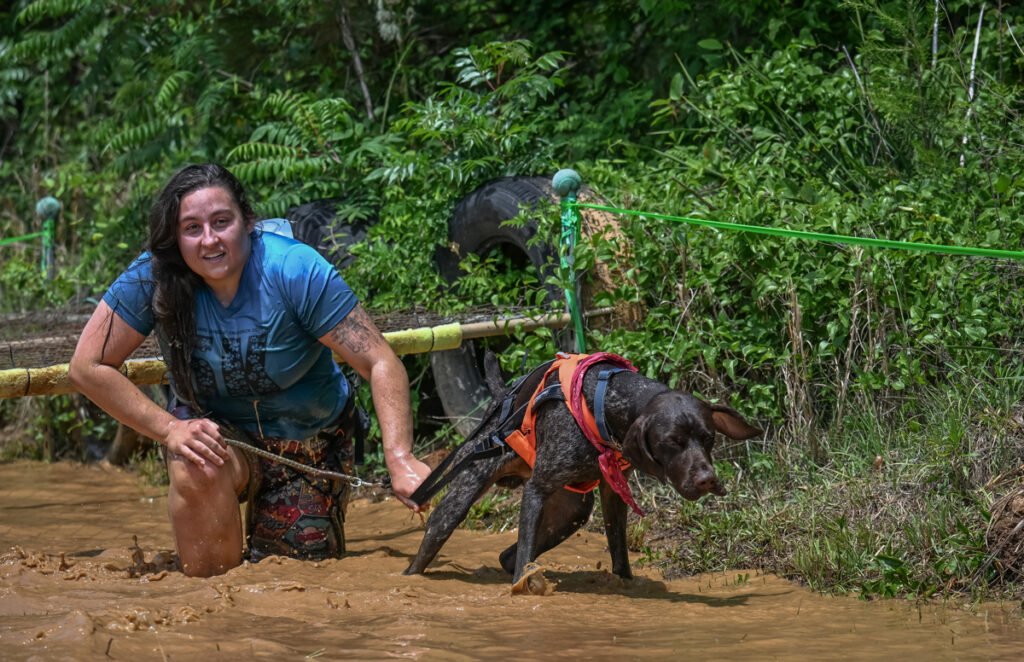
- Canicross: Give your dog an opportunity to run and pull alongside you.
When dogs have appropriate outlets for their natural abilities, training can become more engaging and rewarding.
2. Build a Stronger Relationship
One of the best parts of dog sports is the relationship you develop with your dog along the way.
Training requires communication, patience, consistency, and trust. You learn how your dog thinks, what motivates them, how they respond to challenges, and how to work together when something does not go as planned.
You also begin to recognize the little things: the way your dog tells you they have found a scent, the excitement before a run, or the focus they show when they understand a new exercise.
Over time, you become a better handler, and your dog becomes a more confident partner.
The relationship you build through training carries over into everyday life, too.
3. Provide Mental and Physical Exercise
Dogs need more than a walk around the neighborhood. Many benefit from activities that challenge both their minds and their bodies.
Different sports offer different types of enrichment.
Some activities are physically demanding, while others require concentration, scent discrimination, problem-solving, or precision.
For example:
- Physical challenges: Agility, Fast CAT, lure coursing, canicross, and bikejoring.
- Mental challenges: Scent Work, tracking, Barn Hunt, and obedience.
- Retrieving and chasing: Disc Dog, shed hunting, and retrieving activities.
- Teamwork and communication: Rally, obedience, and agility.
You do not have to choose just one. Trying different sports can help you discover what your dog enjoys most.
Always choose activities that are appropriate for your dog’s age, fitness, health, and experience.
4. Discover What Your Dog Was Bred to Do
Dog sports are a great way to learn more about your dog’s breed and individual personality.
You may discover that your dog has an incredible nose, loves working independently, or has a natural talent for retrieving. You might also find that your dog enjoys something you never expected.
A breed’s original purpose can be a helpful starting point when choosing activities, but it does not have to determine what your dog can do.
A German Shorthaired Pointer might enjoy agility, a Golden Retriever might excel in scent work, and a small mixed-breed dog might become an enthusiastic Barn Hunt competitor.
The important thing is to give your dog opportunities to try new things.
5. Set Goals and Earn Titles
For many handlers, one of the most exciting parts of dog sports is working toward a goal.
Organizations such as the American Kennel Club (AKC), United Kennel Club (UKC), and other sport-specific organizations offer competitions where dogs can earn official titles.
A title recognizes that a dog and handler have completed certain requirements or achieved qualifying results.
Some titles can be earned through a few successful performances, while others require years of training, competition, and dedication.
You might start with an introductory title and eventually work toward advanced championships.
Titles are a fun way to track your progress, but they are not the only measure of success. Learning a new skill, gaining confidence, or simply enjoying a successful training session can be just as rewarding.
6. Meet Other Dog People
Dog sports introduce you to a community of people who share your interest in dogs and training.
You can meet experienced handlers, trainers, breeders, judges, and other dog owners who are happy to share what they have learned.
Attending classes, fun matches, trials, and events can help you find training opportunities and make connections.
You may even discover sports and activities you had never heard of before.
One of the best ways to learn about a new sport is to attend an event, watch the dogs compete, and talk to the people involved.
7. Try Something New at Any Age
You do not have to start competing when your dog is a puppy.
Many sports welcome adult dogs, and some are especially well suited to senior dogs when activities are adapted to their abilities.
A young dog might enjoy building confidence through introductory scent games, while an older dog might enjoy lower-impact activities that challenge its mind.
Some sports require dogs to reach a minimum age before competing, and certain physical activities require additional conditioning and maturity.
There is no need to rush. Start with foundation skills and let your dog develop at an appropriate pace.
8. Find Something That Fits Your Dog
There are so many different dog sports that it can be difficult to know where to begin.
The best sport for your dog is one that matches their interests, abilities, and physical needs.
Here are a few ideas to get you started:
| If your dog loves… | Try these sports |
|---|---|
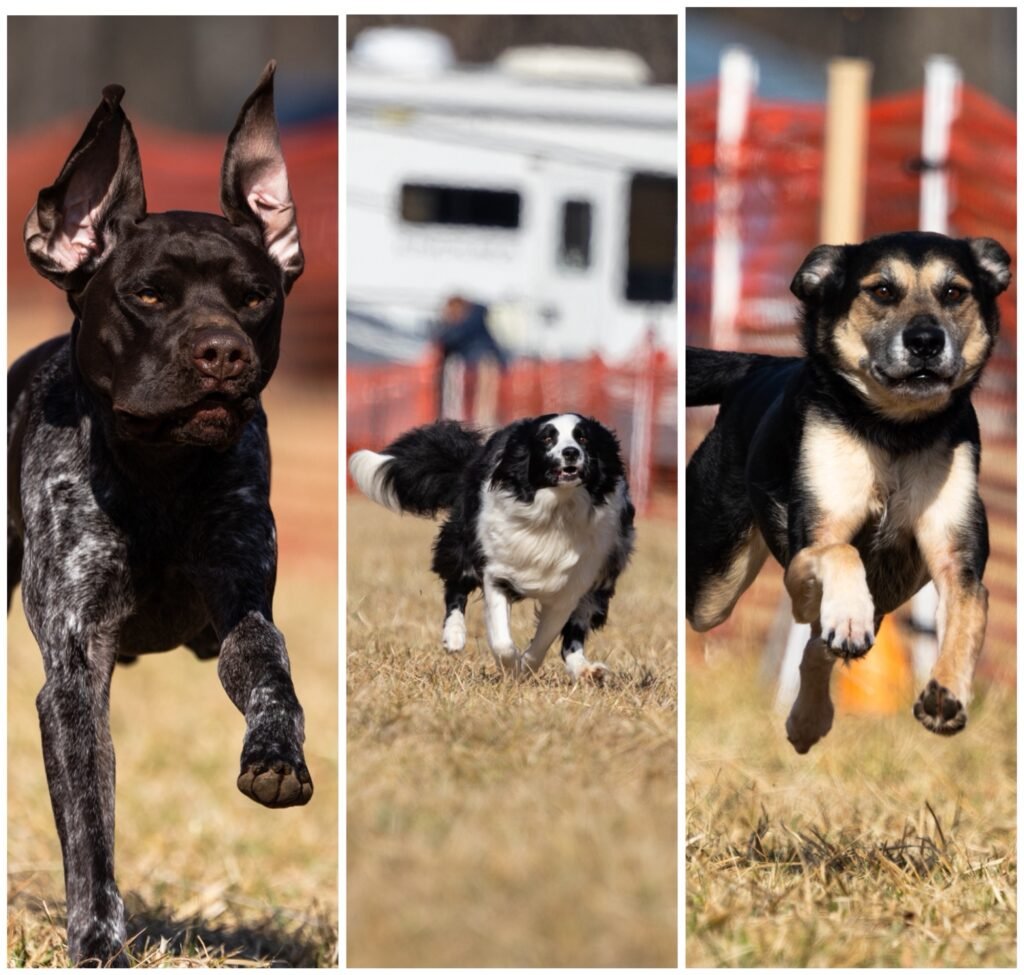
| Running and speed | Fast CAT, Lure Coursing, Canicross |
| Jumping and obstacles | Agility |
| Searching and sniffing | Scent Work, Tracking, Barn Hunt |
| Chasing and catching | Disc Dog, Lure Coursing |
| Retrieving | Shed Hunting, Retriever activities |
| Learning commands | Obedience, Rally |
| Pulling and running | Bikejoring, Canicross |
| Working independently | Tracking, Scent Work |
These are starting points, not rules. Dogs can enjoy sports that have nothing to do with their breed’s original purpose.
How Do You Get Started?
Getting involved in dog sports does not have to be complicated. You can start small and build your experience over time.
Step 1: Find a sport that interests you.
Think about what your dog enjoys doing naturally. Does your dog love sniffing, running, chasing toys, retrieving, or learning commands?
Step 2: Research the sport.
Learn the basic rules, age requirements, equipment, and organizations that offer the activity.
Step 3: Find a local club or trainer.
Look for beginner classes, training groups, workshops, or fun matches. Watching an event is another great way to learn.
Step 4: Build foundation skills.
Start with simple exercises at home or in a training class. Give your dog time to understand the activity before increasing the difficulty.
Step 5: Try an event.
When you and your dog are ready, enter a beginner-friendly event or competition. Your first goal should be to have a positive experience and learn something new.
Step 6: Keep exploring.
You might find one sport that becomes your favorite, or you might end up participating in several different activities throughout your dog’s life.
You Do Not Have to Be Competitive to Participate
Not every dog needs to earn titles, compete at national events, or become a champion.
Dog sports can be enjoyed recreationally, through local clubs, training classes, or simply by practicing activities at home.
Some people love the competition and the challenge of earning titles. Others enjoy the training, the community, and having something fun to do with their dogs.
There is room for both.
Final Thoughts: Get Out There and Try Something!
Dog sports open up a whole new world of opportunities for you and your dog. They give dogs a chance to use their natural abilities, provide new challenges, and create experiences you might never have had otherwise.
You might start with one introductory class and end up traveling to competitions, collecting titles, meeting new friends, and discovering talents you never knew your dog had.
The best part is that you do not have to know exactly where you are going when you start.
Pick something that sounds fun, find an opportunity to try it, and see what your dog thinks.
You might discover that your dog has a talent you never knew existed.
At Chasing the Scandal, we believe there is a dog sport for every dog. Explore our sport guides, learn about different organizations, and find your next adventure together.
There are many kinds of sports that you can enjoy with your dog. Dog sports provide mental and physical exercise for your dog and it can strengthen the bond between the dognap their owner.
Some popular sports includes:
- Conformation – a way to show off your dogs physical structure, gait and temperament.
- Fast CAT – a 100 Yard dash the dog runs.
- Barn Hunt – hunting for rats in a barn.
- Dock Diving – seeing how far or high your dog can jump.
- Shed Hunting – Finding deer antlers in the forest.
- Weight Pull – seeing how much your dog can pull.
- Agility – getting your dog todo through a set of obstacles.
- Lure Coursing – having you dog run 600 meters timed.
- Obedience – going through a course where your dog must perform obedience tasks when asked.
- Rally – you though a course where you must get your dog to perform whatever cards are on the course.
- Scent Work – finding different scents in an area.
- Tracking – trailing after a person.
- Freestyle – dancing with your dog.
- Disc – getting your dog to catch frisbees.
- Trick Dog teaching your dog many tricks to do a small performance.
Whatever you do with your dog just make sure you both are having fun!