
What Is Fast CAT?
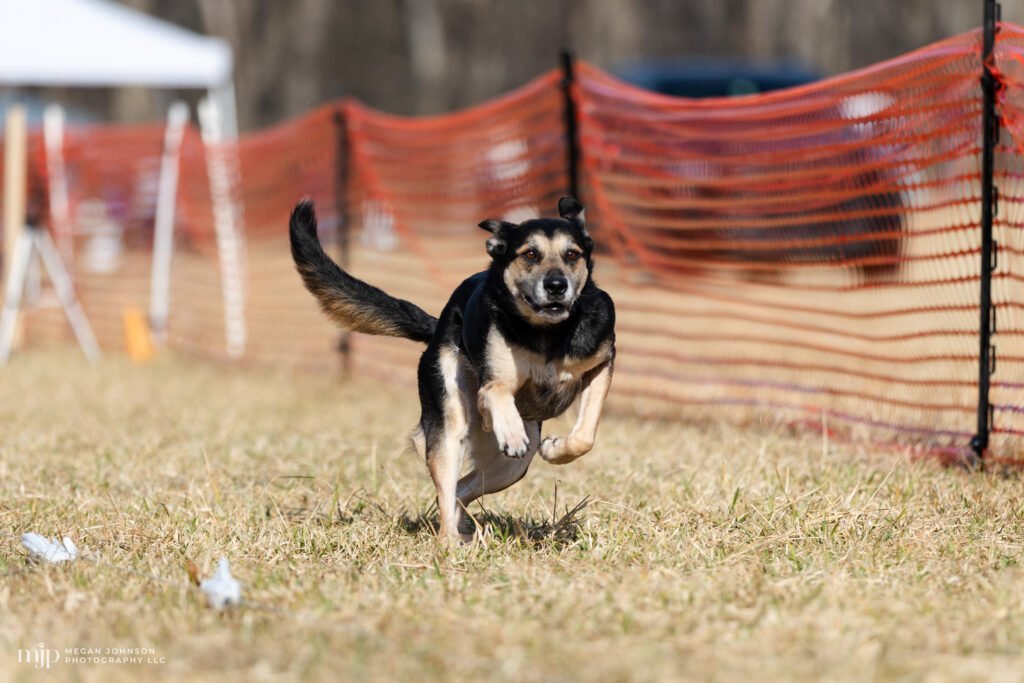
Fast CAT is a dog sport that tests a dog’s speed and natural desire to chase. The name stands for Fast Coursing Ability Test, and the sport consists of a timed 100-yard dash in which dogs run one at a time while chasing a moving lure.
Unlike traditional lure coursing, which involves following a longer course with turns, Fast CAT takes place on a straight track. Dogs sprint from the starting line to the finish, where their handler or another designated person encourages them to complete the run.
Fast CAT is one of the most accessible dog sports for people interested in testing their dog’s speed. Dogs of many breeds, sizes, and backgrounds can participate, and there is no requirement for a dog to have previous competition experience.
Whether your dog is a speedy sighthound, an athletic sporting breed, or a little dog with a surprising amount of speed, Fast CAT is a fun way to discover just how fast they can run!
How Does Fast CAT Work?
A Fast CAT event takes place on a straight, 100-yard course. A mechanical lure moves along the track, encouraging the dog to chase it toward the finish line.
Dogs run individually rather than racing against one another. Each dog’s time is recorded, converted into miles per hour, and used to calculate points toward Fast CAT titles.
A typical run follows these steps:
- Check-in: The dog is checked in and inspected before participating.
- Starting line: The dog is brought to the starting area by its handler.
- The release: The dog is released when the course is ready.
- The chase: The dog runs the 100-yard course after the moving lure.
- The finish: A designated person at the finish line catches or safely collects the dog.
- Timing and points: The dog’s time is recorded and converted into a speed and point score.
The goal is to complete the entire course as quickly as possible while safely chasing the lure.
How Are Fast CAT Points Calculated?
Fast CAT uses a point system that accounts for a dog’s height. This allows smaller dogs to earn additional points through a height-based handicap.
First, the dog’s time is converted into miles per hour (MPH). The dog’s speed is then multiplied by its handicap to determine the points earned for that run.
The AKC handicap system is:
| Dog’s height at the withers | Handicap |
|---|---|
| 18 inches or taller | 1.0 |
| 12 inches to under 18 inches | 1.5 |
| Under 12 inches | 2.0 |
Example: A dog running at 25 MPH with a handicap of 1.5 earns 37.5 points for that run.
The points from qualifying runs accumulate toward official Fast CAT titles.
What Equipment Do You Need?
Fast CAT does not require handlers to purchase specialized equipment. Most of the equipment used to operate the event is provided by the hosting club.
Common items handlers should bring include:
- Collar: A properly fitted collar that meets event rules. Dogs may also run without a collar under AKC rules.
- Leash: Used to safely manage the dog before and after its run.
- Water: Important for hydration before and after running.
- Shade or cooling supplies: Helpful during warm-weather events.
- Towels: Useful for cooling and cleaning up after a run.
- Rewards: Treats or toys can help encourage your dog and make the experience positive.
The event club provides the lure system, timing equipment, and course setup.
How Do You Train a Fast CAT Dog?
Some dogs naturally understand the idea of chasing a lure, while others need a little help learning the game.
Training should begin with building excitement and confidence around chasing a moving object. Dogs can practice running short distances in a safe, controlled environment before progressing to longer sprints.
A typical training progression includes:
- Building interest: Introduce your dog to a moving toy or lure and reward interest in chasing it.
- Short sprints: Practice short, controlled runs to build confidence and enthusiasm.
- Recall and catching: Teach your dog to come to a designated person at the finish line.
- Course introduction: Allow your dog to become familiar with the lure and starting area.
- Conditioning: Build appropriate fitness through gradual exercise.
- Practice runs: If available, attend a practice event to help your dog understand the course.
Fast CAT is a sprinting sport, so physical preparation matters. Dogs should be in appropriate condition before competing, and handlers should pay attention to warm-ups, cool-downs, hydration, and recovery.
Do not repeatedly run a dog at maximum speed just to improve its time. Rest and recovery are important parts of athletic conditioning.
What Organization Offers Fast CAT?
American Kennel Club (AKC)
The American Kennel Club offers the official Fast CAT program.
Fast CAT is open to eligible dogs at least 12 months old. Dogs must have an accepted AKC registration or listing, such as individual AKC registration, Foundation Stock Service (FSS), Purebred Alternative Listing (PAL), or AKC Canine Partners enrollment.
Mixed-breed dogs can participate through AKC Canine Partners. Females in season cannot enter.
Dogs earn points based on their speed and height, and those points accumulate toward official titles.
Some AKC Fast CAT titles include:
- BCAT: The first Fast CAT title, earned at 150 points.
- DCAT: Earned at 500 total points.
- FCAT: Earned at 1,000 total points.
- FCAT2, FCAT3, and higher: Earned for every additional 500 points after FCAT.
Fast CAT also has annual Top 20 rankings that recognize the fastest dogs in each breed.
What Breeds Can Participate?
Fast CAT is open to many different breeds, making it a fun sport for dogs with a wide variety of physical abilities.
Breeds commonly seen participating include:
- Whippets
- Greyhounds
- German Shorthaired Pointers
- Border Collies
- Australian Shepherds
- Labrador Retrievers
- Golden Retrievers
- Belgian Malinois
- Jack Russell Terriers
- Dachshunds
- Corgis
- Mixed-breed dogs
Sighthounds are often associated with speed sports because of their history of chasing moving game, but Fast CAT is not limited to sighthounds.
Some of the most entertaining runs come from dogs that surprise everyone with their speed!
Why Try Fast CAT?
Fast CAT is a fun way to discover your dog’s natural speed and athletic ability. It gives dogs an opportunity to run, chase, and enjoy an activity that many find incredibly exciting.
It is also a great introduction to competitive dog sports because the basic concept is easy to understand. You do not need extensive obedience training or complicated routines to get started.
For handlers, Fast CAT offers an opportunity to meet other dog enthusiasts, attend events, compare breed speeds, and work toward official titles.
Whether you are hoping to earn your dog’s first BCAT or discover whether you have one of the fastest dogs in your breed, Fast CAT is an exciting sport to explore.
Is Fast CAT Right for Your Dog?
Many dogs enjoy chasing a lure, but sprinting at full speed places significant demands on their bodies.
Before participating, consider the following:
- Make sure your dog meets the organization’s minimum age requirements.
- Have your dog evaluated by a veterinarian if you have concerns about its health or fitness.
- Build conditioning gradually rather than expecting an untrained dog to sprint at full speed.
- Allow time for warm-ups and cool-downs.
- Avoid running in unsafe weather conditions, especially extreme heat.
- Give your dog enough rest between runs.
- Never force a dog to chase the lure if it is uncomfortable or uninterested.
The goal is to have a healthy, confident dog that enjoys the experience.
Final Thoughts
Fast CAT is a great way to get involved in dog sports, especially if your dog loves to run and chase. It provides an opportunity to test speed, earn titles, and discover what your dog can do in a fun and supportive environment.
You might start with one run just to see how your dog does and end up following breed rankings, collecting titles, and traveling to Fast CAT events.
And who knows? You might discover that your dog is much faster than you ever expected!
Fast CAT tip: Do not judge your dog’s speed by its breed or size. Every dog gets its own chance to run, and some of the biggest surprises happen when the little dogs hit the track.