What is Conformation?
Conformation is “the overall appearance and structure determined by the physical development of the animals individual parts as well as the combined relationship and outlines of such” (Spira.1982.p.35-36)
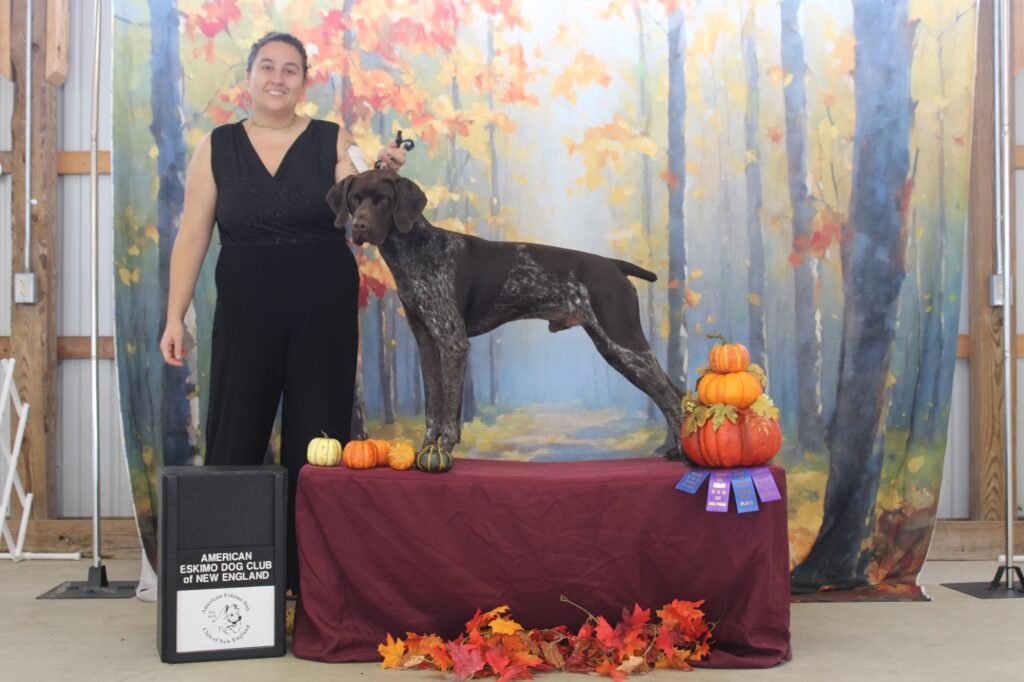
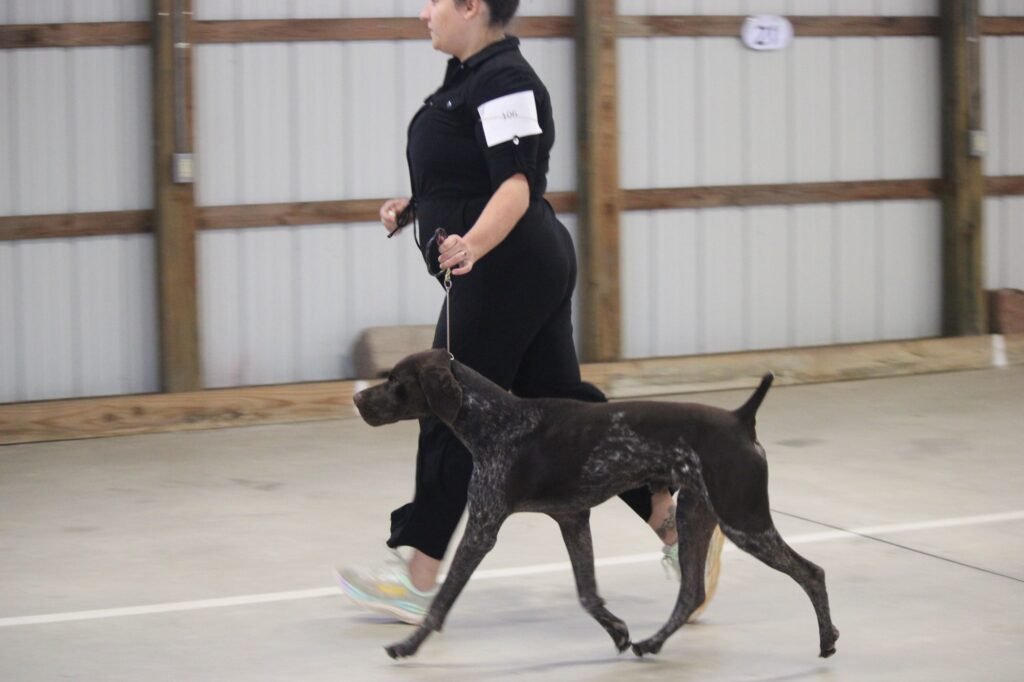
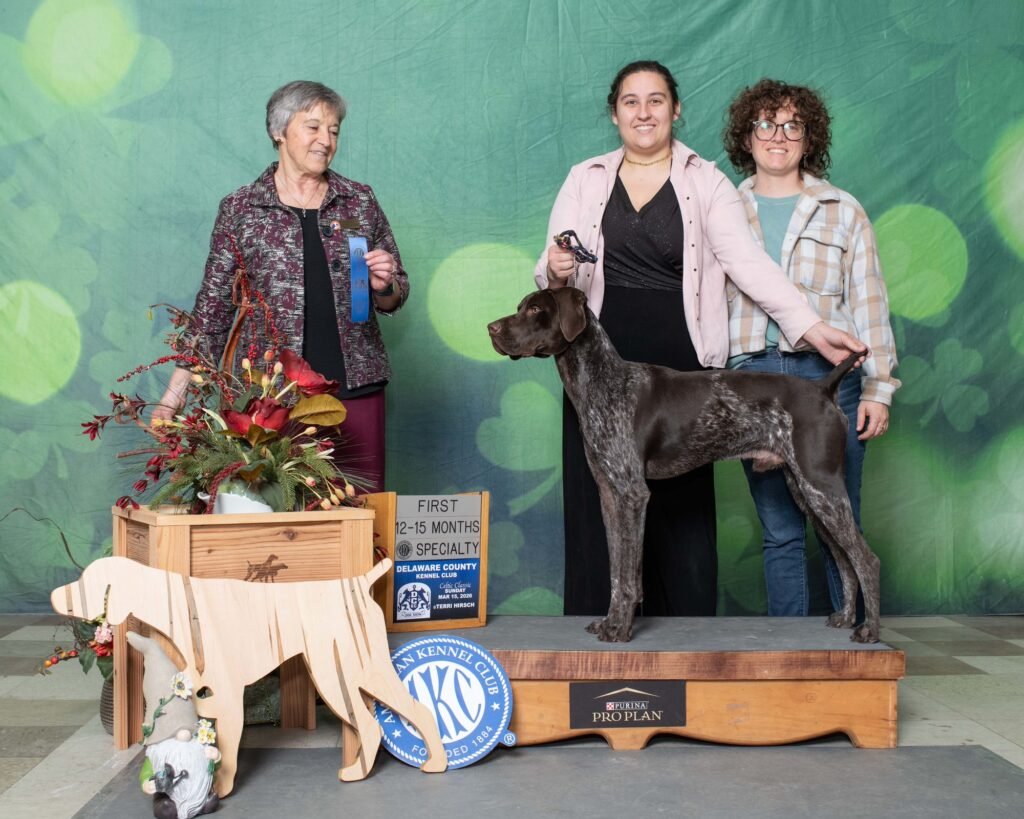
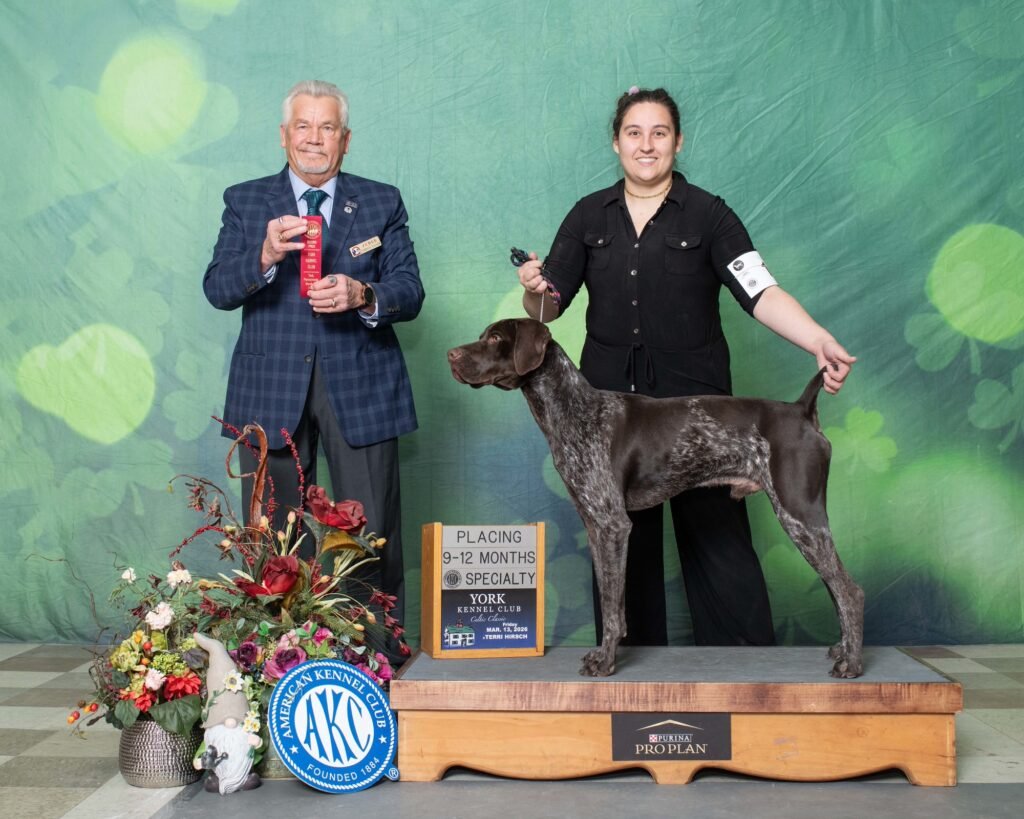
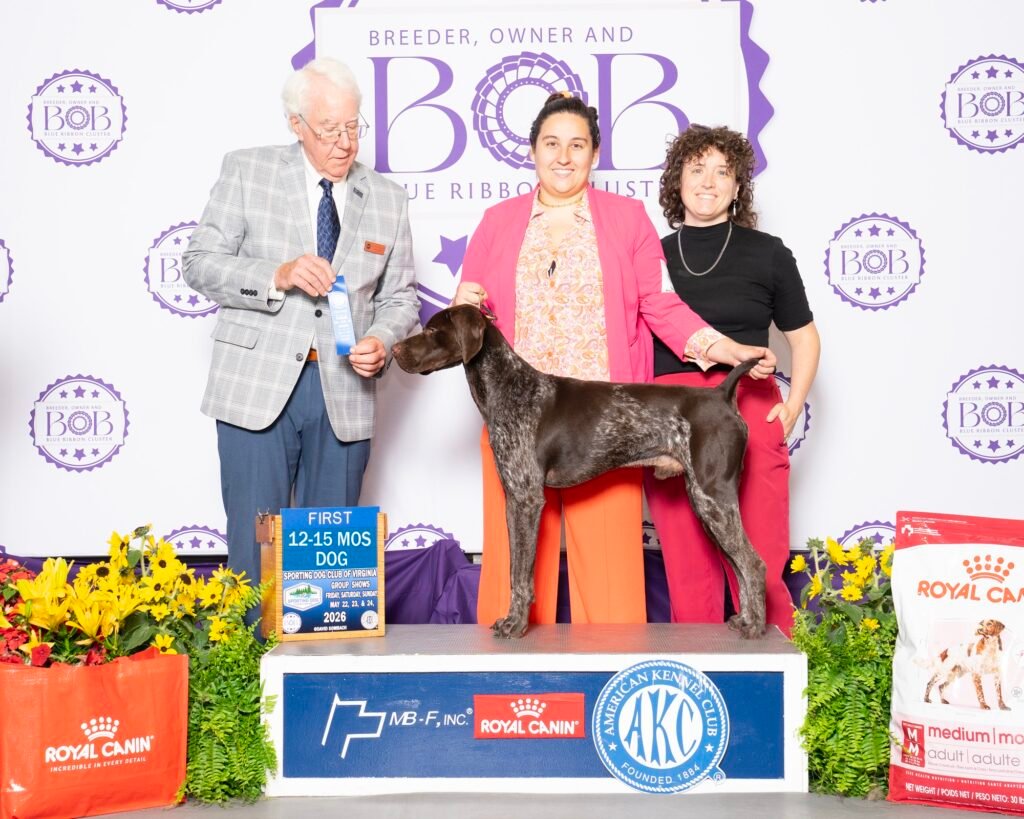
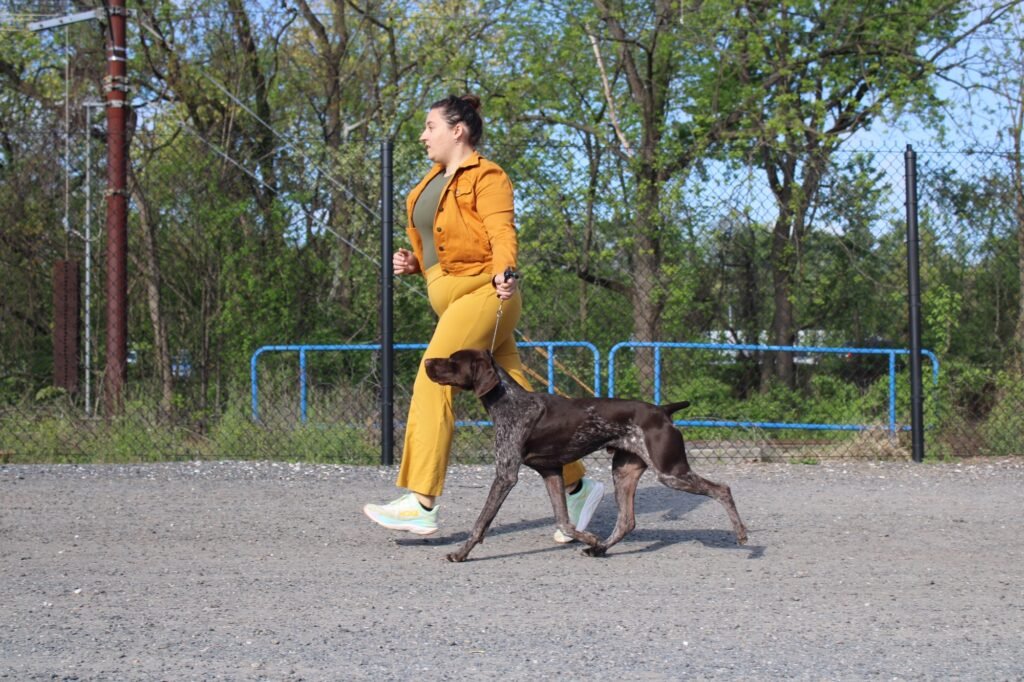
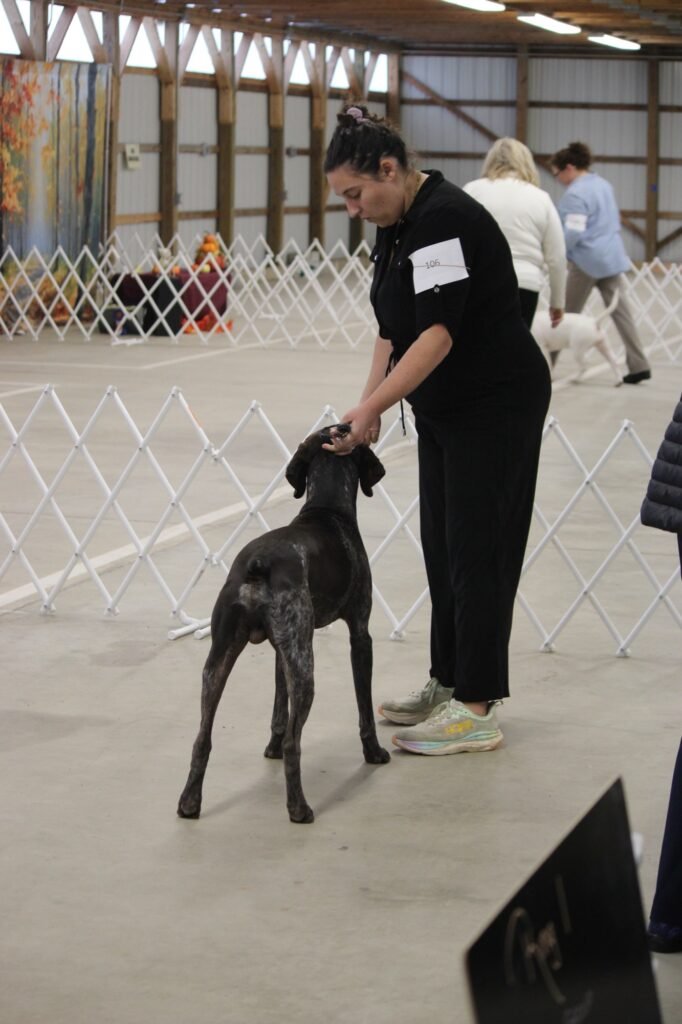
Conformation is also referred to as the act of showing your dog including the dog shows that you see on tv.
Conformation is not judging the dogs in the ring against each other but against the breeds written standard which is set by the breed club of each dog breed. For example, the GSP breed club is the German Shorthaired Pointer Club of America or GSPCA.
Is your Dog Eligible?
To be able to enter your dog into shows you must have:
- A purebred dog
- That dog must be registered in an organization such as AKC or UKC
- The dog must be unaltered if showing in AKC. (UKC accepts altered dogs in their altered division)
- The dog must be 4-6 months old for AKC (At least 6 months of age at the first show for UKC)
- Full registration of the dog.
- Your breed must be accepted by the organization that you plan to show the dog in.
UKC Rulebook can be found here.
AKC Rulebook can be found here.
Trialing:
The easiest way to find shows to participate in is by going to your regions superintendent. The superintendent for my area is Infodog. Infodog is a website that tracks shows that are coming up. I usually find shows by going to “Show Info” and then searching by zip code. Infodog can be tricky to get the hang of though, sometimes the shows listed are not hosted by InfoDog themselves but will have a website on where to sign up and find more information on that particular show.
Understanding Show Classes:
- Puppy class: 4-6 month old puppies can participate in here to earn their Pup Title. No points are gained from competing in this class. It is mostly or experience and training you puppy in a show environment.
- 6-9 months
- 9-12 months
- 12-18 months
- Bred-By: if you breed the dog that you have entered, you can compete in this class.
- Amateur-Owner-Handler (AOH): If you are not a professional handler and you own the dogyou can compete here.
- Open: You usually chose this if your dog has. aged out of the age required classes, you are not the. owner, or you did not breed. the dog.
- Winners Dog/ Winners Bitch: This is the best dog or bitch of the breed out of all the dogs of that breed there. So for example, my breed, the best male and the best female GSP.
- Best of Breed (BOB): This is the dog who has beaten all of the others of its breed.
Your dog can compete in the bred-by, AOH, winners and BOB as long. as. they are at least 6 months of age.
Let’s say that you win Best or Breed, after that you go to group placing. Groups in AKC consist of:
- Sporting
- Nonsporting
- Working
- Terriers
- Hound
- Toy
- Herding
So for my breed I go against all of the other dogs that won best of breed in the sporting groups. If we end up winning groups, then you go onto Best in Show. Best in show is one breed that is picked from all the groups. So there will be a total of 7 dog breeds for the judge to pick the Best in Show from.
What happens when you get their?
We typically get there about an hour early. This helps us to get a parking spot (bring cash for parking), find our ring, get the lay of the land, potty our dog and get ready. After we are comfortable, we make sure to pick up our number. It is located at the table inside the ring that we will be showing in. Working the ring is the judge and the ring steward. The ring steward is the person that is helping the judge get people in the ring, write down winnings, and give people their number. When the steward has a free second, go over to the table that is inside the ring and ask for your number. Never say your dogs name near the ring, it has been said that the judge doesn’t want to be bias when choosing the best dogs. You can find you number either online, usually you will get an email conformation containing it, or at the ringside where they have a premium (book) of everyone who is entered into the show and their number.
References:
- Spira, Harold R. Canine Terminology Harold R. Spira. 1982.
Further Resources:
- A Matter of Breeding by Michael Brandow
- Dogsteps by Rachel Page Elliot (There are a few revisions to this book)
- Secrets of Show Dog Handling by Migliorini
- The Dell Encyclopedia of Dogs